A bad concrete cut cracks the surrounding slab and creates more work than it solves. We use commercial-grade diamond blades and the right method for your specific material so the cut stays where it belongs.
Concrete cutting in Bailey's Crossroads covers three main methods - flat sawing through horizontal slabs, core drilling for round penetrations, and wall sawing through vertical concrete surfaces. The right method depends on the shape of the opening and the orientation of the surface. Most residential cutting jobs are completed in a single visit, with the opening ready for the next trade within hours.
Concrete cutting is often a supporting step in a larger project rather than a standalone job. A drain addition requires a slab cut. A plumbing reroute through a foundation wall requires a core drill. A driveway repair may require removing a section cleanly before new concrete is poured. Our concrete driveway building and repair work frequently starts with precise removal cutting to isolate the damaged section without disturbing the adjacent concrete.
Floor drains in garages, utility rooms, and basements require an opening cut through the slab so the drain body can be set and connected to the drain line below. Cutting a neat rectangular opening avoids cracking the surrounding floor and makes the pour-back cleaner and stronger.
Gas lines, water lines, electrical conduit, and HVAC ducts that need to pass through a concrete foundation wall require a core drill or saw cut. Hammering through without a saw almost always creates uncontrolled cracking that is difficult to seal properly afterward.
When only a portion of a driveway, patio, or floor slab has failed, a straight saw cut isolates that section cleanly so it can be removed without disturbing the adjacent concrete. This is far more reliable than breaking out with a jackhammer from the edge.
Slabs that were poured without adequate control joints often crack randomly as the concrete shrinks and expands with temperature changes. Saw-cutting control joints into the slab after the fact guides future cracking to the joint lines rather than the surface of the slab.
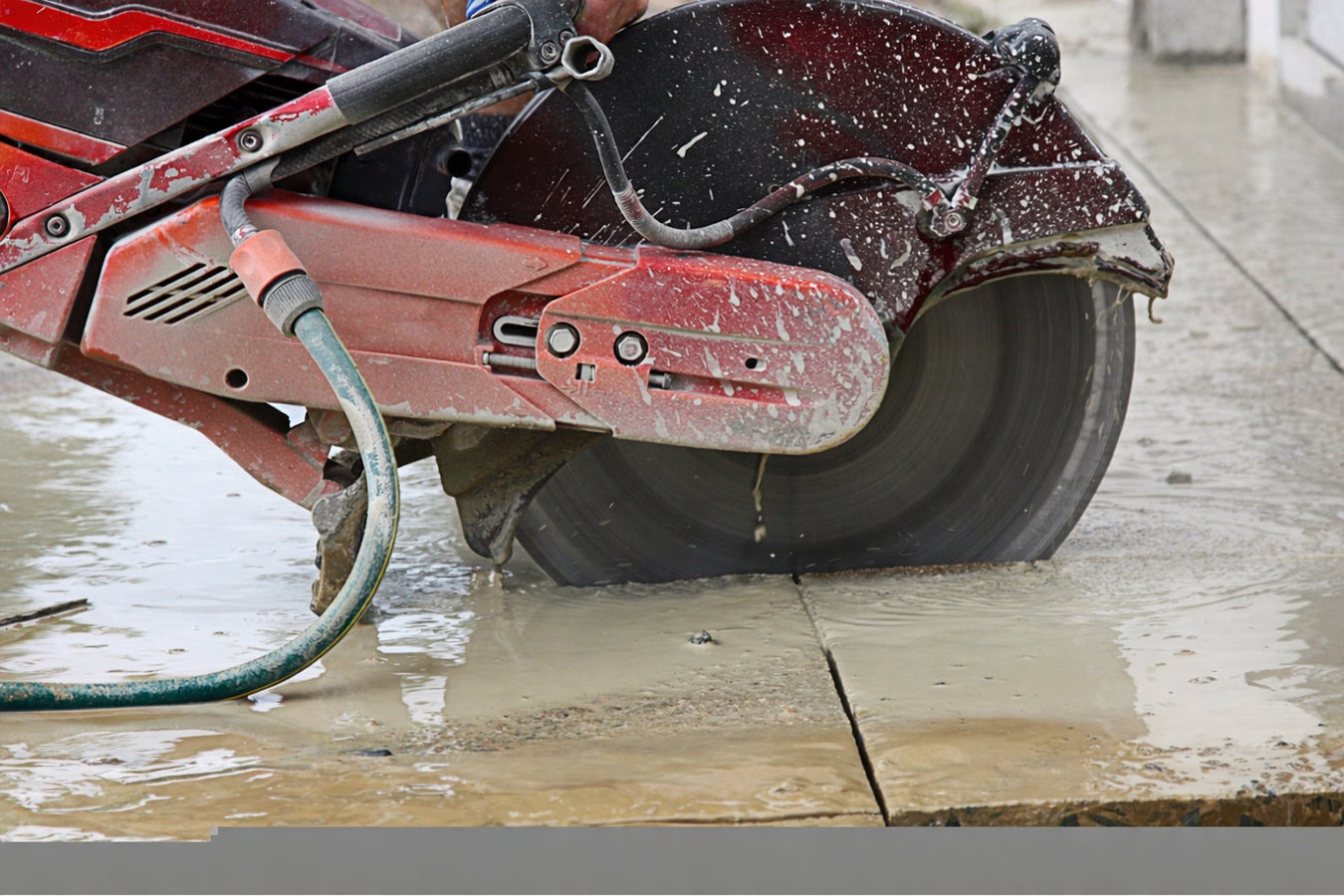
We provide flat sawing, core drilling, and wall sawing for residential and light commercial projects. Flat sawing uses a walk-behind or handheld diamond blade saw to cut through horizontal concrete - floors, slabs, and paved surfaces. It is used for drain openings, slab section removal, and control joint additions. We cut to a specified depth and finish with straight, consistent lines that are ready for the pour-back or utility installation.
Core drilling creates round penetrations through slabs or walls for pipes, conduit, anchors, and structural inserts. Wall sawing uses a track-mounted diamond blade saw to cut through vertical concrete surfaces - foundation walls, retaining walls, and concrete block walls - for doorways, windows, and utility penetrations. Both methods are used across our service range, including as prep work for our concrete parking lot building and repair projects where damaged sections need to be isolated before new concrete is poured.
For homeowners and contractors who need clean linear cuts through horizontal slabs for drain installations, section removal, and control joint additions.
For round penetrations through slabs or foundation walls for pipes, conduit, tie-backs, and anchor inserts where a drill bit would not reach.
For creating door and window openings through concrete foundation walls, or cutting utility penetrations through vertical surfaces where a flat saw cannot be positioned.
Older homes throughout Northern Virginia were built before modern plumbing and utility layouts became standard. That means a significant number of renovation and addition projects in this area require cutting through existing concrete that was not designed with future access in mind. Slab-on-grade homes from the 1950s through the 1980s are common in the communities we serve, and most of them were built with thicker slabs and more rebar than newer construction - making professional cutting equipment more important, not less.
We complete concrete cutting projects for homeowners and contractors throughout the region, including in Arlington, VA and Springfield, VA. The American Concrete Institute publishes standards for concrete construction and repair that inform best practices for cutting depths, joint spacing, and opening reinforcement - guidance that applies directly to the type of renovation cutting we handle regularly.
We respond within one business day. Tell us the surface type, approximate thickness if known, the shape and size of the opening, and what the cut is for. We schedule a quick on-site look before quoting so there are no surprises on the day of the work.
We inspect the surface, check for visible rebar or utility markings, confirm the required opening dimensions, and provide a written quote. For cuts near utilities or in tight access areas, we note any special setup requirements in advance.
We set up the saw or drill, make the cuts to the specified dimensions and depth, and clean the slurry from the work area before leaving. Water cooling keeps dust down during flat sawing. Core drilling uses a vacuum collar for interior work.
After cutting, you have a clean, straight opening ready for drain installation, utility work, or concrete removal. We can also handle the pour-back after the utility work is complete if that scope is part of the project.
We respond within one business day, review the job on-site at no charge, and provide a written quote before any cutting starts. No guessing at a price without seeing the material first.
Commercial diamond blade saws and core drills produce clean, consistent cuts through reinforced concrete without the uncontrolled cracking that comes from using underpowered equipment. We bring the right tools for the slab thickness and reinforcement level on your specific job.
Because we pour and finish concrete ourselves, we understand how slabs are built and where the weak points are. That context helps us plan cuts to avoid creating new problems - whether that means avoiding a control joint, staying clear of a post-tension tendon, or sequencing cuts to protect adjacent sections.
We have been working in Bailey's Crossroads and Northern Virginia since 2017 and are familiar with the slab construction common in this region's housing stock - thicker pours, more rebar, and older aggregate mixes that cut differently than modern residential concrete.
Interior cuts in finished spaces require slurry vacuum systems and dust management to protect the rest of the home. We bring that equipment to interior jobs as a standard part of the setup, not an add-on that needs to be requested separately.
Concrete cutting is a precision trade - the difference between a clean opening and a cracked slab is the right equipment and the right technique. We bring both to every job, whether it is a single core drill or a multi-cut removal sequence on a commercial slab.
New driveway installation or full replacement using reinforced concrete, including removal cutting and haul-away of the existing slab before the new pour.
Learn MoreCommercial and multi-unit concrete parking lot construction, including section repairs that start with precise saw cuts to isolate the failed area before new concrete is placed.
Learn MoreConcrete cutting scheduled before the rest of your project is on hold costs less and takes less time than emergency calls mid-project. Reach out today and we will have a quote ready within one business day.