A settled foundation does not fix itself. If your floors are uneven, your doors are sticking, or you see cracks opening in the walls, call us and we will tell you exactly what is happening and what it takes to correct it.
Foundation raising in Bailey's Crossroads addresses settlement - the gradual downward movement of a foundation caused by soil compression, poor drainage, or inadequate original bearing depth. The process uses concrete mudjacking or structural underpinning to lift the settled sections back toward their original level. Most jobs take one to several days depending on the scale and method involved.
Foundation raising is often the middle step in a broader repair sequence. Before the lift, the site conditions that caused settlement need to be understood. After the lift, surface cracks and cosmetic repairs can be addressed. If your home was built on a slab that has partially settled, the work is related to our slab foundation building service - we understand how slabs are designed and poured in this region, which makes us better equipped to diagnose and correct settlement in existing ones.
When the frame of your home shifts because the foundation below it has dropped, door frames and window frames go out of square. Doors that used to close easily now bind or no longer latch. This is one of the earliest signs of foundation movement and should not be ignored.
Floors that feel like they slope toward one side of a room, or that show visible gaps where floor covering meets the wall, indicate the substructure below has moved. Tile floors may crack or pop up along the grout lines as the slab shifts beneath them.
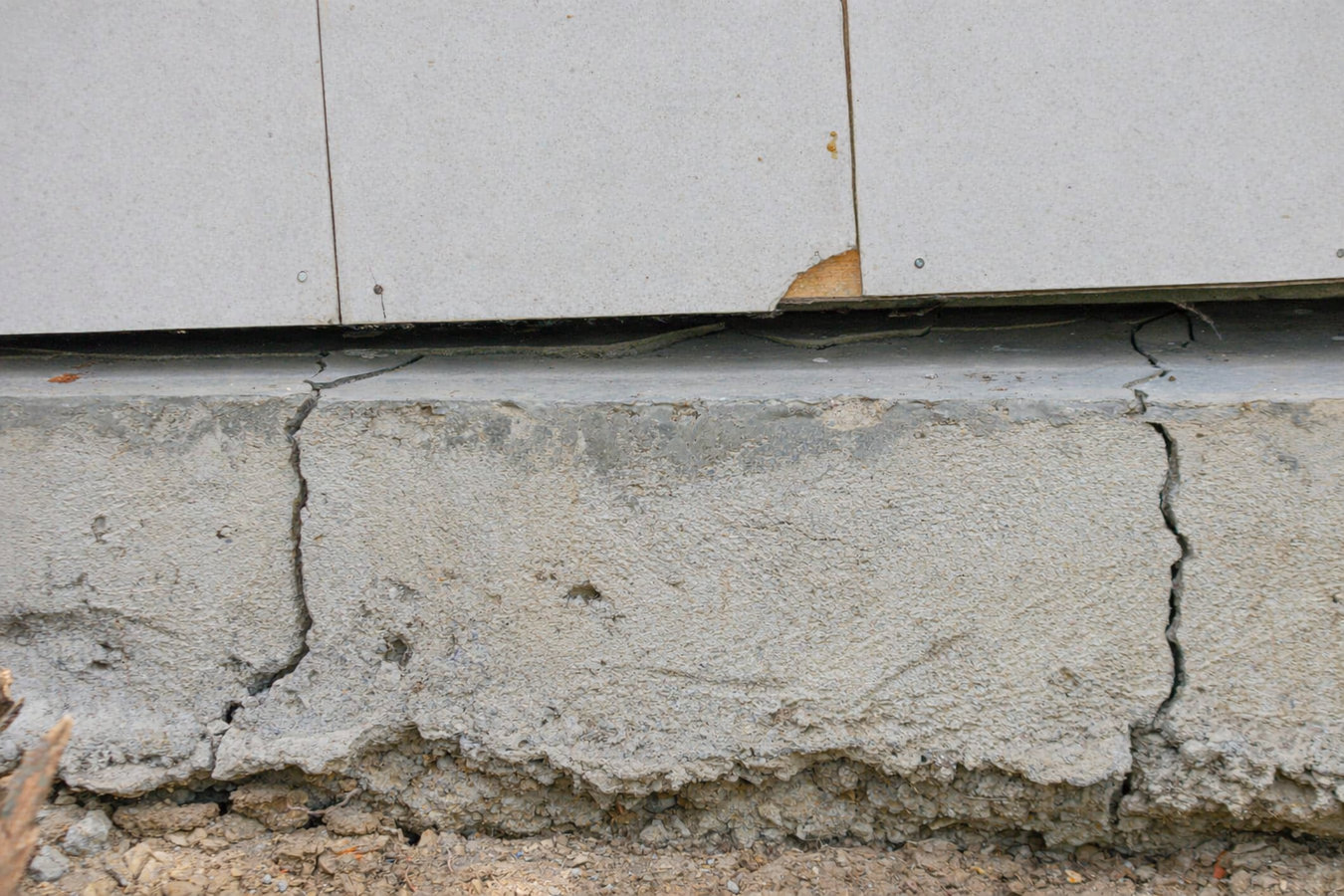
Diagonal cracks running from the corners of door frames or windows, horizontal cracks in a foundation wall, or stair-step cracks in brick or block work all point to foundation movement. Vertical hairline cracks from normal curing are less concerning, but diagonal and horizontal cracks should be assessed.
A visible gap opening between the top of the foundation wall and the sill plate or framing above it means the foundation has dropped while the structure above it has not moved with it. This creates a serious energy and structural concern that worsens with every season the gap goes unaddressed.
We handle foundation raising using two primary methods depending on the nature and extent of the settlement. Mudjacking - also called slabjacking or pressure grouting - uses a cement and soil slurry pumped through small holes in the slab to fill voids and lift settled concrete from below. This is well suited for settled porch slabs, garage floors, and sidewalk sections where the issue is void formation or soil washout rather than deep structural failure.
For deeper structural settlement, underpinning installs new bearing points below the existing foundation and transfers the load to competent soil or bedrock below the problem zone. This approach is used when soil conditions at the original bearing depth have changed or were inadequate from the start. Both methods connect to our broader foundation work, including concrete cutting when existing slabs or walls need to be opened as part of the repair access or drainage correction work.
For homeowners dealing with settled porch slabs, sunken garage floors, and sinking concrete walkways where void formation below the slab is the primary cause.
For properties where the foundation wall or footing has dropped due to inadequate original bearing depth or long-term soil movement that cannot be addressed with surface injection alone.
For homes that need the foundation stabilized first and then the resulting cracks, gaps, and surface damage addressed in a follow-on scope to restore the structure to a finished condition.
The Northern Virginia region has a mix of clay-heavy soils that expand when wet and shrink when dry. This seasonal soil movement - known as expansive soil behavior - puts cyclic stress on foundations that were poured when the soil was in one moisture state and then experience years of swelling and shrinking around them. Combined with the age of much of the area's housing stock, foundation settlement is a common problem that gets worse the longer it is left unaddressed.
We complete foundation raising projects for homeowners throughout the region, including in Arlington, VA and Alexandria, VA , where older homes on clay soils are particularly common. The International Association of Certified Home Inspectors provides publicly available guidance on recognizing and categorizing foundation movement that homeowners can use to understand what they are seeing before they call for an assessment.
We respond within one business day. Describe what you are seeing - sticking doors, floor slopes, visible cracks - and we will schedule a site visit. Bring photos if you have them; they help us prepare before we arrive.
We inspect the foundation, identify the type and cause of settlement, and assess which correction method is appropriate. You receive a written quote with a clear description of the scope - no verbal estimates that change later.
We perform the lift using the method specified in the quote - mudjacking or underpinning - and monitor the result throughout the process. Permitting is handled as part of the project if the jurisdiction requires it.
After the lift, we review the result with you, note any follow-on crack repair or drainage work that should be completed, and schedule those items if needed. You leave the project knowing the structure is stable and what to watch for going forward.
We come to the site at no charge, assess the cause and extent of settlement, and give you a written quote with a clear explanation of what needs to be done and why. One business day response time.
We have worked in this region since 2017 and understand the soil conditions, frost depths, and building code requirements that affect foundation performance here. That local knowledge helps us diagnose accurately and choose the right correction method the first time.
Foundation work has a reputation for vague proposals and scope creep. We write down exactly what we will do, why, and what it costs before we start. If we find something unexpected during the work, we call you before changing the scope.
Expansive clay soils are a consistent challenge throughout Fairfax County, Arlington County, and the surrounding suburbs. We have completed foundation repairs on properties with exactly this soil profile and understand how to correct settlement in a way that accounts for future seasonal movement.
Most foundation raising projects in this jurisdiction require a building permit. We are familiar with the permit process in the counties and cities we serve and can manage that requirement as part of the project rather than leaving it to you to navigate separately.
Foundation settlement in Northern Virginia is a manageable problem when it is caught and addressed before it progresses. We give homeowners a clear picture of what is happening, what the fix involves, and what the work will cost.
Precision cutting of existing slabs and foundation walls to create access openings, drainage channels, or removal sections as part of repair and renovation projects.
Learn MoreNew monolithic slab installation for additions, ADUs, garages, and sheds that need a properly reinforced concrete base designed for the soil conditions on your property.
Learn MoreSettlement gets worse every season it goes unaddressed. Call or submit a request today and we will have someone at your property within a business day to assess the situation and give you a written quote.